
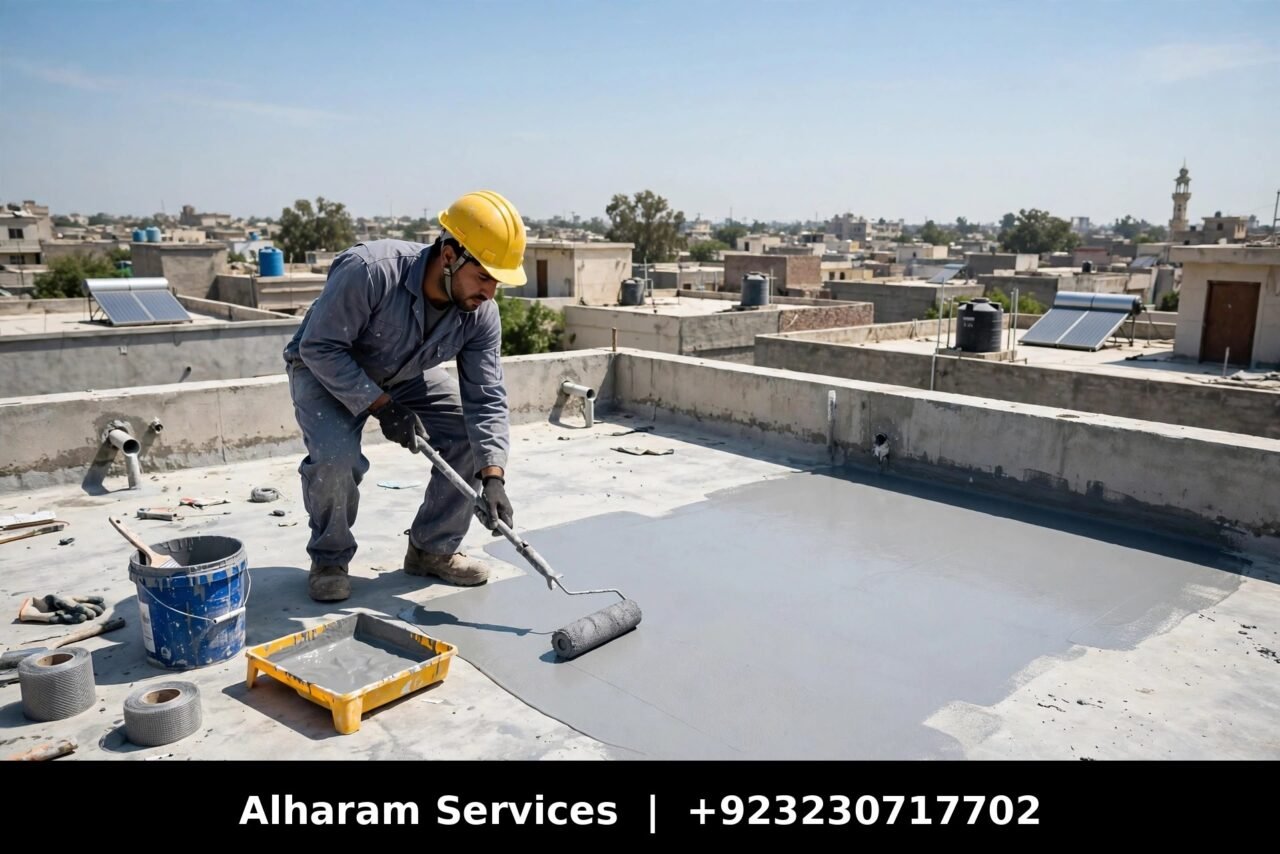

Roof waterproofing in Multan is not a luxury — it is a necessity. Multan’s summers are among the hottest in Pakistan, monsoon rain arrives in heavy bursts, and most homes here have flat concrete roofs. That combination is hard on a roof: intense heat cracks the surface, rainwater finds every small crack, and the result is seepage, damp walls, peeling paint and damaged ceilings. A proper waterproofing treatment, done at the right time with the right material, protects your home for years. This guide explains every method, material and cost factor, so you can decide with confidence — and know exactly what to ask any contractor before work starts.
Why Roofs Leak in Multan
A concrete roof looks solid, but it is full of tiny pores and hairline cracks. In Multan, three forces work against it. First, heat: summer temperatures regularly cross 45°C, and the roof slab expands during the day and contracts at night. Over years, this thermal movement opens fine cracks. Second, rain: monsoon showers are short but intense, and water ponds on flat roofs where the slope is poor. Standing water seeps through cracks within hours. Third, age: an untreated roof slab absorbs water every season, the steel inside can start to rust, and the damage spreads downwards into the rooms below. If you see damp patches on the ceiling, bubbles in the paint, or a musty smell after rain, your roof is already telling you it needs waterproofing. For a full seasonal care routine, see our home maintenance guide in Multan.
Signs Your Roof Needs Waterproofing
Do not wait for water to drip from the ceiling. The early signs are easy to spot if you check your roof twice a year — once before the monsoon and once after. Look for damp patches or dark stains on the top-floor ceiling, paint that bubbles or peels near the roof line, plaster that sounds hollow when tapped, green algae or moss growing on the roof surface, and cracks wider than a hairline around the parapet wall or near water tanks. A simple test also helps: pour a bucket of water on a suspect area and watch whether a damp patch appears on the ceiling below within a few hours. If it does, the slab is letting water through. Catching the problem at this stage is far cheaper than repairing a damaged ceiling, a rusted slab and a repainted room later.
Roof Waterproofing Methods Used in Multan
There is no single best method — the right choice depends on your roof’s condition, your budget and how long you want the protection to last. The most common methods in Multan are cementitious coating, bitumen membrane, liquid waterproofing membrane, and polyurethane coating. Cementitious coating is a cement-based slurry brushed onto the surface; it is affordable, easy to apply and works well on sound concrete. Bitumen membrane is a torch-applied sheet that forms a tough waterproof layer; it is the traditional choice for large flat roofs and lasts well when protected from direct sun. Liquid membranes are painted on in two or three coats and form a seamless, flexible skin — ideal for roofs with many pipes, drains and corners. Polyurethane coating is the premium option: highly flexible, resistant to standing water and heat, and suitable for roofs that will carry foot traffic or solar panels. A professional inspection decides which method suits your roof, because applying an expensive coating over a cracked, unprepared surface is money wasted.
Cementitious Waterproofing: The Affordable Start
Cementitious waterproofing is the most common first treatment in Multan homes. A polymer-modified cement slurry is mixed on site and applied with a brush in two coats, usually with a fibre mesh embedded in the first coat at joints and corners. It bonds directly to concrete, costs less than membrane systems, and a small team can finish an average house roof in a day or two. Its limits are real, though: it is rigid, so it can crack again if the slab moves, and it needs a protective screed or tiles on top if the roof will be walked on. It is best for roofs in good condition, as a first line of defence, or as part of a combined system. If your roof already has wide cracks or old failed coatings, a flexible membrane will serve you better.
Bitumen Membrane Waterproofing
Bitumen membrane — often called torch-on membrane — has protected Multan roofs for decades. Rolls of bitumen sheet are unrolled on the roof and heated with a torch so they bond to the surface, with overlaps of about 10 centimetres sealed the same way. The result is a thick, continuous waterproof layer that handles ponding water well. The key to a good membrane job is preparation: the surface must be clean, dry and primed, all joints must be sealed, and the membrane must turn up at least 15 centimetres along the parapet wall. A membrane left exposed to Multan’s sun will age faster, so it is usually covered with a protective screed, reflective paint or tiles. Done properly, a membrane system is one of the longest-lasting options for a flat roof. Our construction team in Multan applies membrane systems on new and old roofs alike.
Liquid Membrane and Polyurethane Coatings
Liquid-applied membranes are the modern choice for complicated roofs. The coating is rolled or sprayed on in layers, cures into a seamless rubber-like skin, and follows every curve, pipe and drain without joints — and joints are where most leaks start. Acrylic liquid membranes are affordable and easy to recoat, but they soften under long-standing water. Polyurethane is stronger: it stays flexible in heat and cold, resists ponding water, and can take light foot traffic. It costs more and needs a dry, well-prepared surface, but for a roof that will hold solar panels or a water tank, it is often the right investment. Whichever coating you choose, insist on the manufacturer’s recommended number of coats and drying time between coats — a rushed single coat is the most common reason a new treatment fails in its first monsoon.
Roof Waterproofing Cost Factors in Multan
Homeowners always ask for a price, and the honest answer is that it depends on five factors. First, roof size: work is priced by area, so a 5-marla roof costs far less than a 1-kanal roof. Second, the method: cementitious coating is the cheapest, liquid membranes sit in the middle, and polyurethane or a full membrane system with protective screed costs more. Third, roof condition: cleaning, crack repair, slope correction and old-coating removal all add labour before the waterproofing even starts. Fourth, material brand and warranty: branded materials with a written warranty cost more than unbranded drums, but they are the ones that actually last. Fifth, access and extras: water tanks, solar panel frames and parapet repairs add time. Get a written quote that lists the method, the material brand, the number of coats, the preparation work and the warranty period — and compare quotes on those details, not on the total alone. For how construction pricing works in general, read our house construction cost guide for Multan.
Step-by-Step: How a Professional Job Is Done
A proper waterproofing job follows the same steps every time, and you can use this list to check your contractor’s work. Step one is inspection: walk the roof, mark cracks, check the slope towards the drains, and test where water ponds. Step two is cleaning: sweep, wash and remove loose material, old paint and algae so the coating can bond. Step three is repair: fill cracks, rebuild broken slope with screed where needed, and seal the joints around pipes, drains and the parapet. Step four is priming: apply the primer the system needs so the coating sticks. Step five is application: lay the membrane or paint the coats, with mesh at joints and the correct overlap or thickness. Step six is curing: let each coat dry fully before the next, and keep the roof dry for at least 24 to 48 hours. Step seven is protection and testing: add the protective layer, then flood-test a section before the monsoon to prove the work holds. Any contractor who skips preparation or curing is cutting the corners that decide whether the job lasts two years or ten.
Common Waterproofing Mistakes to Avoid
Most failed waterproofing jobs fail for the same few reasons. Applying coating over a dirty or wet surface is the biggest one — the coating peels off in sheets within months. Ignoring the slope is another: no coating can hold back water that stands for days, so drains must be clear and the slope must carry water away. Covering wide cracks with coating alone, instead of filling them first, guarantees the crack will reopen. Choosing the cheapest unbranded material with no warranty usually means repeating the whole job in two years. And skipping the flood test means the first real test is the monsoon — when repairs are hardest to do. If you are renovating the rooms below at the same time, plan the roof first: there is no point repainting a ceiling that will get wet again. See our home renovation guide for Multan for the right order of work.
Waterproofing for New vs Old Roofs
A new roof is the best time to waterproof. During construction, the slab can be treated before anyone moves in, the slope can be built correctly from the start, and the cost is a small part of the total build. If you are building now, ask your contractor to include waterproofing in the grey-structure stage rather than treating it as an afterthought — our grey structure vs complete finishing guide explains where this step belongs in the build. An old roof needs more work: the surface must be checked for hidden damage, loose material removed, and sometimes the old failed coating stripped entirely. Old roofs also need the parapet, drains and water-tank base checked, because leaks often start at these edges rather than in the middle of the slab. Either way, the right time to waterproof is before the monsoon, not during it — coatings need dry weather to cure, and every contractor in Multan is booked solid once the rains start.
How Long Does Roof Waterproofing Last?
A realistic lifespan depends on the method and the maintenance. A well-applied cementitious coating with a protective layer typically lasts 3 to 5 years. A bitumen membrane system, protected from direct sun, commonly lasts 8 to 10 years. A quality polyurethane coating lasts 8 to 12 years. These are not guarantees — they assume the roof is cleaned yearly, drains are kept clear, and small cracks are sealed when they appear. Ask for the warranty in writing and keep the receipt and material details; a warranty you cannot prove is worth nothing. Plan a roof inspection every spring: ten minutes on the roof can save you a full re-treatment.
Maintaining Your Waterproofed Roof
Waterproofing is not a one-time job. Keep the roof clean — leaves and dust hold moisture against the coating. Keep every drain and spout clear before the monsoon. Do not drag heavy objects across the coating, and place rubber mats under water tanks and solar panel frames. Recoat high-wear areas when you see thinning, and seal any new crack the same week you find it. If you have solar panels, check the mounting points every year, because each fixing is a possible leak path — our solar panel installation guide covers roof preparation for panels. Small, regular care is what turns a five-year coating into a ten-year one.
Once the roof is dry and protected, it is also the right time to refresh the rooms below — damp walls that were stained by the old leak can be covered with Wall Sheets in Multan for a clean, finished look, and pairing the job with Wooden Flooring in Multan gives the whole room a fresh start in one coordinated visit.
Why Choose Alharam Services for Roof Waterproofing
Alharam Services handles roof waterproofing across Multan — from DHA Multan and Gulraiz Town to MDA Officers Colony, Bosan Road, Wapda Town and surrounding areas. Our team inspects your roof first, explains which method suits it and why, and quotes the work in writing with the material brand, the number of coats and the warranty period. We prepare the surface properly, apply the system to the manufacturer’s standard, flood-test the work, and leave your roof clean. We also handle the related work in one visit where needed — drain and slope correction, parapet repair, and ceiling repair in the rooms below. Call 03230717702 or visit our contact page for a free roof inspection, or explore all our services to see what else we cover for your home.
Frequently Asked Questions
How much does roof waterproofing cost in Multan?
The cost depends on your roof size, its condition, and the method you choose — cementitious coating is the most affordable, while polyurethane and membrane systems cost more. A written quote after a roof inspection is the only reliable price, because preparation work varies from roof to roof. Call Alharam Services on 03230717702 for a free inspection and a written quote.
How long does roof waterproofing last?
A cementitious coating typically lasts 3 to 5 years, a protected bitumen membrane 8 to 10 years, and a quality polyurethane coating 8 to 12 years — assuming yearly cleaning, clear drains and small repairs when needed. Always get the warranty in writing.
Can waterproofing be done in the rainy season?
It is not recommended. Most coatings need a dry surface and 24 to 48 hours to cure. The best time is before the monsoon, in dry weather. Emergency leak repairs can be done in rain, but a full treatment should wait for a dry spell.
Will waterproofing stop seepage in my ceiling?
Yes, if the seepage comes from the roof — which is the most common cause. Our inspection first confirms the water is coming from the roof and not from a plumbing leak or a neighbour’s tank, so you pay for the right fix.
Do I need to remove the old coating before new waterproofing?
If the old coating is loose, peeling or cracked, yes — it must be removed so the new layer can bond to sound concrete. If it is firmly stuck and in fair condition, it can sometimes be cleaned and over-coated. The inspection decides.
Related Articles
- Home Maintenance in Multan: Seasonal Checklist to Protect Your House
- House Construction Cost in Multan 2026: Complete Guide to Budgeting Your Home
- Home Renovation in Multan: Plan, Budget and Remodel Room by Room
Call to Action
Is your roof ready for the next monsoon? Book a free roof inspection with Alharam Services today — call 03230717702, email alharamservices786@gmail.com, or visit our contact page. One dry season of preparation protects your home for years.


Leave a Reply