

Why Interior Design Matters in a Multan Home
A house in Multan is not just walls and a roof. It is where a family spends the hottest afternoons of June, the cool evenings of December, and every wedding, Eid gathering and Sunday lunch in between. Good interior design is not about expensive imported furniture or copying a picture from the internet. It is about making the rooms you already have work better for the way your family actually lives — cooler in summer, brighter in winter, easier to clean, and comfortable enough that guests feel welcome the moment they sit down.
Multan’s climate shapes every design decision. Summer temperatures regularly cross 45°C, dust settles on everything, and load shedding still interrupts the day in many areas. A design that looks beautiful in a cool-climate showroom can feel unbearable here if it ignores ventilation, heat and dust. The ideas in this guide are chosen for real homes in DHA Multan, Citi Housing, Buch Villas, Royal Orchard, Bosan Road, Gulgasht, Model City and MDA Officers Colony — homes where families live, not display houses.
Whether you are finishing a new house, refreshing a ten-year-old drawing room, or furnishing a first flat, the principles below will help you spend wisely and avoid the mistakes that cost Multan homeowners the most money: buying furniture before measuring, choosing colours that fade in harsh sunlight, and paying for work twice because the first contractor was never given a clear plan.
Start With a Plan, Not a Shopping Trip
The most expensive interior design mistake in Pakistan is also the most common: buying furniture and decoration first, then trying to fit it into the rooms. A sofa that looked perfect in a showroom on Bosan Road can block a doorway, cover a window, or leave no space for the dining table once it is home. Measure every room before you buy anything — length, width, ceiling height, door swings and window positions. A simple hand-drawn floor plan on paper is enough; you do not need expensive software.
Decide the function of each room before its look. A drawing room that hosts guests every weekend needs durable seating and easy-to-clean surfaces. A bedroom needs darkness for sleep and storage that hides clutter. A study corner needs light and a proper chair. When the function is clear, the furniture and colours choose themselves — and you stop buying things that look good but serve no purpose.
Set a realistic budget in writing and divide it by room, keeping about ten percent aside for the surprises every renovation brings: a cracked wall behind old wallpaper, wiring that needs replacing, or a tile batch that runs short. If you are working with a professional team, ask for the full scope in writing — materials, labour, and timeline — before work begins. Our interior design services in Multan start with exactly this kind of written plan, so there are no surprises halfway through the work.
Living Room Ideas That Work in Multan
The living room — or drawing room — is the heart of a Pakistani home. It is where guests are received, where the family gathers after dinner, and where the television, the prayer corner and the children’s homework often share the same space. Design it for real use, not for a photograph.
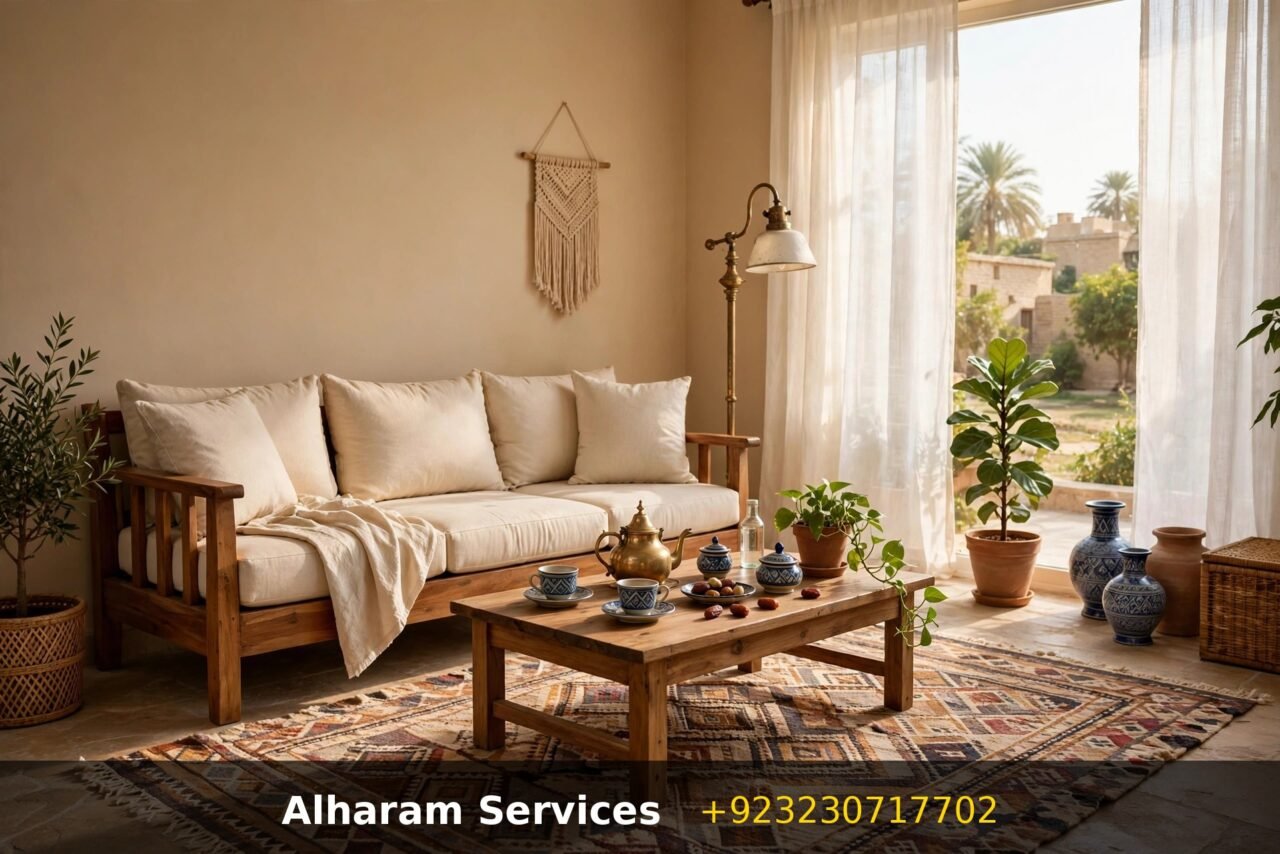
Choose seating that survives daily life. Solid wood frames with good-quality foam last far longer than cheap imported sets, and loose cushion covers in washable fabric are a practical choice in a dusty city. Keep the main sofa in a neutral tone — beige, warm grey or soft brown — and add colour through cushions, a rug and curtains that can be changed cheaply when tastes change. A light-coloured sofa shows dust quickly; a very dark one shows every crumb. Mid-tones are the most forgiving.
Leave breathing space. A common error is pushing every piece of furniture against the walls and filling the middle with a large table. Pull the sofa a few inches away from the wall, keep walkways at least 90 centimetres wide, and let the room feel open. A large mirror on the wall opposite a window doubles the light and makes a small drawing room feel twice as big — one of the cheapest tricks in interior design.
Plan for the television and the air conditioner together. The TV should sit at eye level from the main sofa, not high on the wall where necks ache. Keep the AC where cool air reaches the seating area without blowing directly on anyone, and hide the wiring inside trunking or behind a false ceiling panel rather than letting cables run across the wall.
Bedroom Ideas: Comfort, Storage and Sleep
A bedroom should help you sleep well and start the day calmly. That means darkness, quiet and storage — in that order. Heavy curtains or blackout lining matter more than any decoration, especially on west-facing windows that catch the harsh afternoon sun in Multan. A ceiling fan with a proper regulator and a quiet inverter AC will do more for your sleep than the most expensive bed.
Storage is where most Pakistani bedrooms fail. Clothes, bedding, winter quilts and the children’s books all need a home, or the room will never look tidy no matter how it is decorated. Floor-to-ceiling wardrobes use dead space above the door height and keep the floor clear. Under-bed storage boxes hold seasonal bedding. A small dressing table with a mirror and proper light saves the whole family from crowding one bathroom mirror in the morning.
Keep the colour palette calm: soft whites, warm beige, pale sage or dusty blue. Bright feature walls look exciting for a week and tiring for a year. If you love strong colour, put it in the bedspread, the cushions or a single piece of art — things you can change without repainting the room. Warm white bulbs (2700–3000K) in the bedroom feel restful; bright white light belongs in the kitchen and study, not where you sleep.
Kitchen and Dining: Practical Beauty
The kitchen is the hardest-working room in the house, and in Multan it also battles heat, steam, oil and dust. Design it for cleaning first and beauty second — the two usually agree. Smooth, non-porous countertops wipe clean in seconds; textured tiles and open shelves collect grease and need constant scrubbing. Good ventilation, ideally a proper chimney hood vented outside, protects the whole house from cooking smells settling into curtains and sofas.
Layout matters more than luxury fittings. The classic work triangle — stove, sink and fridge within easy reach of each other — saves hundreds of wasted steps every day. Keep the most-used items between waist and shoulder height, put heavy pots in deep lower drawers rather than high cabinets, and leave at least one clear stretch of countertop for preparation. If you are planning a full kitchen upgrade, our detailed guide on kitchen design in Multan covers layouts, materials and cost factors room by room.
For dining, a table that seats the family plus two guests covers most days and most gatherings. Extendable tables are a sensible investment in smaller homes. Place the dining area near natural light if possible — meals taste better in daylight, and the family lingers longer at the table.
Colours That Survive Multan’s Sun and Dust
Colour is the cheapest way to transform a home, and the easiest to get wrong. Multan’s intense sunlight fades bright paints quickly on sun-facing walls, and dust dulls pale colours within weeks. Choose with the climate in mind.
Warm neutrals are the safest foundation: off-white, warm beige, light greige and soft terracotta. They stay bright in strong light, hide dust better than pure white, and suit both traditional carved furniture and modern minimalist pieces. Add depth with one accent wall in a deeper tone — deep green, navy, or burnt orange — but keep it to a single wall per room, ideally the one behind the bed or sofa.
Test paint properly. Buy a small tin, paint a large patch on the actual wall, and look at it in morning light, afternoon light and under your evening bulbs before committing. A colour that looks perfect in the shop’s fluorescent light can turn pink, grey or yellow in your home. The same rule applies to curtains and upholstery: hold the fabric against the wall in your own room, not under shop lights.
For exterior-facing walls and rooms that get direct sun, ask for UV-resistant paint. It costs a little more and fades far more slowly. Inside, washable emulsion is worth the premium in homes with children — fingerprints and marks wipe off instead of needing a repaint.
Furniture: Local Craft, Smart Choices
Multan has a proud tradition of woodwork and craftsmanship, and good local furniture is often better value than imported flat-pack pieces. Solid sheesham and kikar wood furniture, made by skilled local carpenters, can last decades and be repaired when damaged — something glued chipboard rarely allows. Visit the workshop, check the joints, and ask what wood is actually being used; a reputable maker will tell you plainly.
Mix old and new rather than replacing everything. A carved wooden chest, a traditional brass tray or a handwoven rug from a family home can anchor a modern room and give it character no showroom can sell. One or two heritage pieces per room is enough — more than that, and the room starts to look like a museum.
Buy the big pieces first and the decoration last. Bed, sofa, dining table and wardrobes decide how the room works; lamps, frames and cushions are the finishing layer. If the budget is tight, it is better to buy one excellent sofa and live with plain walls for a month than to fill the room with cheap furniture that needs replacing in two years.
Lighting and False Ceilings
Lighting changes everything about a room, and it is the most under-planned part of most Pakistani homes. A single harsh ceiling bulb in the middle of the room flattens everything and casts ugly shadows. Layered light works better: a main ceiling light for general brightness, warm lamps for evening comfort, and focused light where work happens — over the kitchen counter, the reading chair, the dressing table and the children’s study desk.
A false ceiling does more than hide wiring and look modern. In Multan’s heat it creates an insulating air gap that keeps rooms noticeably cooler, and it lets you place recessed lights exactly where they are needed instead of wherever the original bulb point happened to be. Cove lighting — a hidden strip of warm LED light around the ceiling edge — gives a soft, expensive glow for very little electricity. LED lights also matter during load shedding: they draw little power and work well on UPS and solar backup.
Use daylight wherever you can. Sheer curtains let light in while keeping privacy, and keeping windows clean makes a surprising difference. In new construction, larger windows on the north side bring in light without the punishing western sun — a decision best made at the design stage, when it costs nothing.
Floors and Walls: Durable Finishes for Daily Life
Floors take the most punishment in any home, so choose for durability first. Large-format porcelain tiles are the practical standard in Multan: they stay cool in summer, resist stains, and clean easily. Wooden flooring looks warm and premium in bedrooms and drawing rooms, but it needs protection from water and direct sunlight, and it costs more to maintain. In high-traffic areas like the entrance and kitchen, tiles are the sensible choice; reserve wood for rooms where it will be enjoyed, not abused.
Walls deserve the same practical thinking. Washable paint in the drawing room and bedrooms, tiles up to a sensible height in the kitchen and bathrooms, and wallpaper only on dry interior walls — never on a wall with any history of seepage, where it will peel within months. Fix seepage and damp first, then decorate; decorating over damp is money thrown away. Our guide on home maintenance in Multan explains how to find and fix seepage before it damages new paint and furniture.
Rugs and carpets soften hard floors and define spaces — a rug under the sofa marks the sitting area, one under the dining table marks the eating area. Choose flat-weave or low-pile rugs in busy family areas; they trap less dust and are far easier to clean than thick shaggy carpets in a dusty city.
Small Homes and Flats: Make Every Inch Count
Many families in Multan live in 5-marla, 7-marla or smaller houses, or in flats where every square foot matters. Small spaces need smarter design, not less design. The rules are simple: light colours on walls, furniture that does more than one job, and storage that uses height.
Multi-purpose furniture earns its place: a sofa bed for guests, a dining table that folds against the wall, ottomans with storage inside, and beds with drawers underneath. Wall-mounted shelves and tall, narrow cabinets use vertical space that otherwise goes to waste. Keep the floor as visible as possible — furniture on legs, rather than solid to the floor, makes a room feel larger.
One large mirror, one clear focal point per room, and a strict rule against clutter do more for a small home than any renovation. If something has not been used in a year, it is taking up space that your family could be living in.
What Drives the Cost of Interior Design in Pakistan
Homeowners often ask for a single price for interior design, but the honest answer is that cost depends on a handful of clear factors. Understanding them helps you control the budget instead of being surprised by it.
Scope is the biggest factor: a single drawing room refresh costs far less than a full-house interior. Materials come next — solid wood, imported fittings and branded sanitary ware cost more than local equivalents, and the difference is often in durability rather than appearance. Labour quality matters too: an experienced team that finishes cleanly the first time is cheaper than a cheap team that has to redo the work. Design complexity, such as custom panelling, curved false ceilings or built-in furniture, adds time and cost. Finally, the condition of the existing house matters — fixing seepage, rewiring or levelling floors before decorating adds to the bill, but skipping those repairs costs far more later.
Control costs by deciding the scope in writing, choosing materials yourself where possible, and finishing one room properly before starting the next. A phased approach — drawing room first, bedrooms next, kitchen when the budget allows — gives you a finished, liveable result at every step instead of a half-finished whole house. For a complete home refresh, see our guide on home renovation in Multan, which explains how to plan and budget a room-by-room remodel.
Common Mistakes to Avoid
First, copying a design made for another climate or culture. A dark, heavy interior that suits a cold country feels oppressive in Multan’s heat and light. Second, buying everything at once before living in the space — use a room for a few weeks first, and you will learn where the light falls, where the family actually sits, and what is really missing. Third, ignoring scale: oversized furniture in a small room, or tiny decoration on a large empty wall, both look wrong. Fourth, choosing style over maintenance — white fabric sofas with small children, open shelving in a dusty kitchen, or wallpaper on a damp wall will all punish you within months. Fifth, hiring on price alone without seeing previous work or getting a written scope; the cheapest quote is often the most expensive in the end.
Frequently Asked Questions
How much does interior design cost in Multan?
There is no single fixed price. Cost depends on the size of the space, the materials you choose, the scope of work and the condition of the existing house. A single-room refresh with paint, curtains and furniture rearrangement costs far less than a full-house interior with false ceilings, built-in wardrobes and new flooring. The best approach is a written quote for your specific home after a site visit.
What is the best interior design style for a Pakistani home?
The styles that work best here blend modern comfort with local character: clean modern layouts, warm neutral colours, solid wood furniture and a few traditional pieces such as handwoven rugs or carved wood. Pure minimalist white interiors look good in photographs but show dust quickly and feel cold; a warm modern style with local craft suits Multan’s climate and family life better.
Can I do interior design on a small budget?
Yes. The highest-impact, lowest-cost changes are paint, lighting, curtains and rearranging furniture to fit the room properly. A single accent wall, warm LED bulbs, new cushion covers and one large mirror can transform a drawing room without any structural work. Finish one room properly, then move to the next when the budget allows.
How do I choose colours for a hot climate like Multan?
Choose warm neutrals for the main walls — off-white, warm beige or light greige — because they stay bright in strong sunlight and hide dust. Always test paint on the actual wall in morning and evening light, and use UV-resistant, washable paint on sun-facing walls.
Should I hire an interior designer or do it myself?
If the work involves a single room, new paint and furniture, many homeowners manage well with a clear plan. For a full house, new construction finishing, false ceilings, built-in furniture or a kitchen remodel, a professional team saves money in the long run by avoiding costly mistakes, coordinating trades and finishing on schedule. You can see the full range of what we offer on our services page.
Get a Free Quote for Your Home
Every home in Multan is different — different size, different light, different family, different budget. The ideas in this guide are a starting point; the best results come from a plan made for your actual rooms. Alharam Services offers interior design, renovation, construction and home services across Multan, including DHA Multan, Citi Housing, Buch Villas, Royal Orchard, Bosan Road, Gulgasht, Model City and MDA Officers Colony.
Call us at 03230717702 or email alharamservices786@gmail.com for a free consultation and quote. You can also reach us through our contact page — tell us which rooms you want to improve, and we will visit, measure and give you a clear written plan with no obligation.


Leave a Reply