
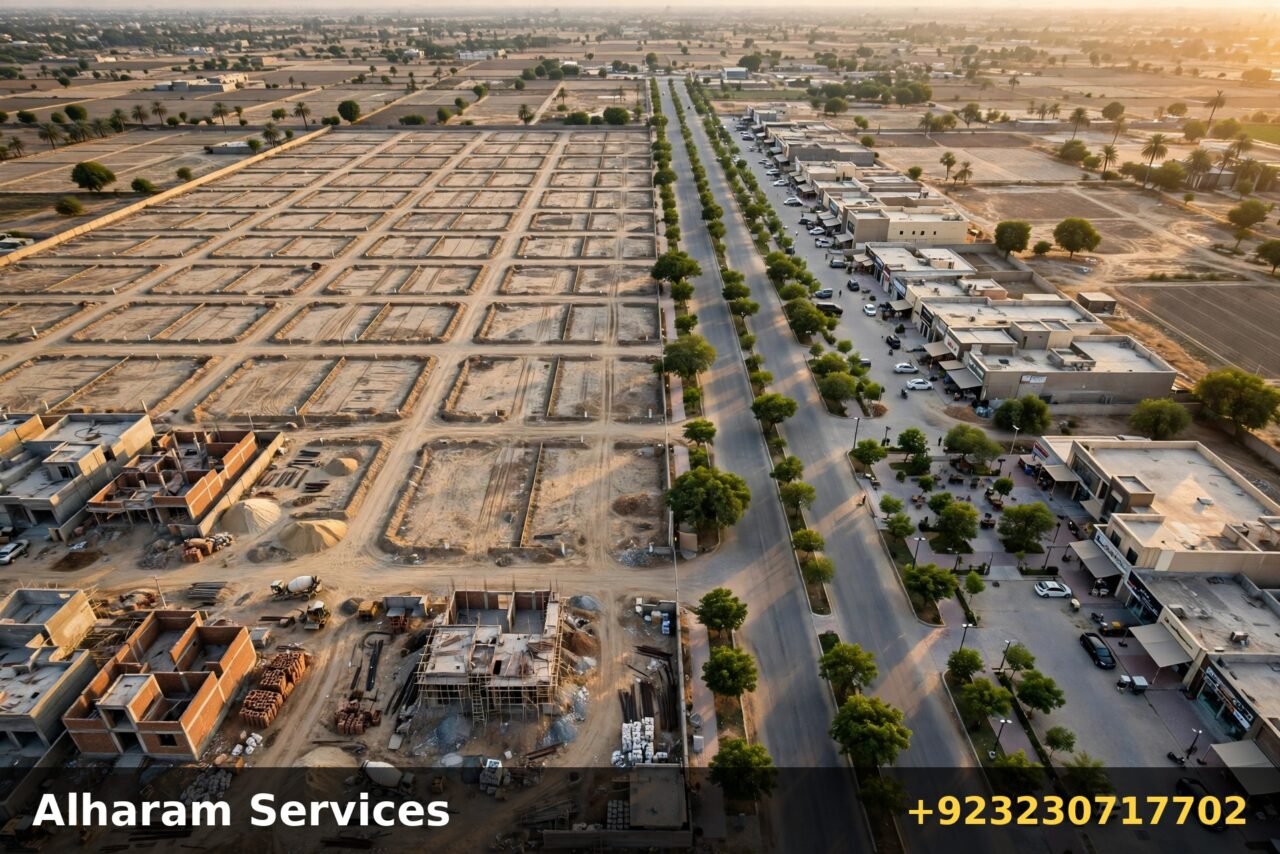

Buying a plot is the biggest property decision most families in Multan ever make — and the first fork in the road is a simple one: commercial or residential? Both are land, both sit in the same housing societies, and both can grow in value. But they behave like two different investments. A residential plot is bought to build a home and live in it. A commercial plot is bought to earn — a shop, an office, a plaza, or rent from someone else’s business. The price per marla, the rules, the paperwork, the returns and even the risks are different for each. This guide compares commercial vs residential plots in Multan side by side, with the practical detail a buyer actually needs before paying anything.
What Is a Residential Plot?
A residential plot is land approved for building a house. In Multan’s housing societies — DHA Multan, Citi Housing, Buch Villas, Royal Orchard, Wadi-e-Punjab and similar schemes — residential plots come in standard sizes, most commonly 5 marla, 7 marla, 10 marla and 1 kanal, with larger 2-kanal options in some blocks. The society’s approved map marks these plots as residential, which means the building you construct on them must be a house, not a shop or office.
Residential plots are the natural first step for a family that wants to build its own home. You buy the land, get the map approved, and build at your own pace — a ground floor now, the first floor later. Because the end goal is living there, buyers judge a residential plot by things like street width, distance to the main gate, nearby park or mosque, the block’s reputation, and whether the neighbours have already built houses. A street where half the houses are complete is worth more in practical terms than an empty street in the same block, because water, gas, electricity and security are already working there.
Most residential buyers in Multan fall into two groups. The first is the end user — a family buying to build and live. The second is the long-term investor who buys a residential plot in a developing block and waits for the society to fill up. Both benefit from the same thing: steady, predictable demand, because people will always need houses.
What Is a Commercial Plot?
A commercial plot is land approved for business use — shops, offices, showrooms, restaurants, clinics, banks or a full commercial plaza. In most Multan societies, commercial plots sit on the main boulevard, near the main gate, or around a designated commercial centre. They are far fewer in number than residential plots, which is exactly why they cost more per marla.
The buyer of a commercial plot is usually either a business owner who wants their own shop or office, or an investor who will build shops and rent them out. A single commercial plot on a busy road can hold several shops on the ground floor and offices above, so one piece of land can produce several streams of rent. That earning power is the reason commercial plots command a premium — you are not just buying land, you are buying a location where business happens.
Commercial plots come with their own conditions. The society’s rules usually fix the covered area, the number of floors allowed, the setback from the road, and whether a basement is permitted. A commercial building also needs different approvals than a house, and the construction cost per square foot is higher because of the structure, the shop fronts, the parking and the finishing a business location demands.
Commercial vs Residential Plots: The Key Differences
The table below sums up the comparison. The detail after it explains what each difference means for your money.
- Purpose: Residential plots are for building a home to live in. Commercial plots are for business premises and rental income.
- Price per marla: Commercial plots generally cost several times more per marla than residential plots in the same society, because of their location and earning potential.
- Availability: Residential plots are plentiful — hundreds or thousands per society. Commercial plots are limited, usually only along main roads and in commercial centres.
- Rental income: A residential plot earns nothing until a house is built and rented. A commercial plot, once developed, can earn rent from shops and offices.
- Value growth: Residential plots usually grow steadily as the society fills up. Commercial plots can grow faster when the area becomes a business hub, but they can also stay flat if the expected footfall never arrives.
- Rules and approvals: Residential construction follows standard house-building rules. Commercial construction needs commercial map approval, and the society enforces stricter conditions on height, parking and use.
- Running costs: A vacant residential plot costs little to hold — mainly society charges. A commercial property carries higher taxes, higher utility tariffs and ongoing maintenance of the building.
- Resale market: Residential plots have a wide resale market — almost any buyer can use one. Commercial plots have a smaller, more specialised buyer pool, so selling can take longer even when the price is right.
Cost Factors: What Decides the Price of a Plot in Multan
Nobody can honestly quote you a fixed price for a plot in Multan without knowing the exact society, block and street. Prices move with the market, and any article that prints a single figure as fact is misleading you. What a good buyer needs instead is the list of factors that decide the price — so you can judge any plot you are offered. These are the factors that matter most:
Location inside the society. The same 10-marla residential plot can be worth far more on a 60-foot main road than on a 30-foot inner street. For commercial plots, location is everything: a plot on the main boulevard near the gate, or facing a busy road like Bosan Road, commands a premium over one tucked inside a commercial centre with poor access.
Society and block. DHA Multan, Citi Housing, Buch Villas and Royal Orchard each have their own market, and inside each society the older, developed blocks cost more than the new, developing ones. A plot in a block where houses are already built and families are living is worth more than the same size in a block that is still mostly empty land.
Plot size and shape. Standard sizes sell fastest because buyers know them and banks and valuers understand them. Odd-shaped plots, very narrow plots, or plots with an irregular corner can be harder to sell later, even if they are cheaper today.
Corner, facing and extra land. A corner plot, a park-facing plot, or a plot facing a main road usually carries a premium. So does a plot with extra land beside it, though you should always confirm in writing whether that extra land is part of your plot or society land.
File vs registry, and development status. A plot with a clear registry and paid-up development charges is worth more than a file with outstanding dues. Before you pay, confirm the development charges, the possession status, and whether the plot is ready for construction. Our property verification guide for Multan walks through every document you should check before you hand over money.
Utilities and access. Water, gas, electricity, sewerage, carpeted roads and street lights add real value. A plot in a block where these are already working is worth more than one where they are promised for later — promises do not keep a house running.
For commercial plots, two more factors dominate: the footfall the location can actually generate, and the commercial activity already around it. A shop plot next to a busy market earns from day one; a shop plot in a commercial centre that never filled up earns nothing. Visit the location at different times of the day — morning, evening and weekend — before you decide. A road that looks busy at noon can be empty at night.
Returns and Rental Income: What Each Type Earns
People buy plots for two kinds of return: the value of the land going up, and the rent it earns. The two plot types behave very differently on both.
A residential plot earns its return mainly through value growth. You buy in a developing block, the society fills up, roads and utilities arrive, houses get built around you, and the plot becomes worth more. If you build a house on it and rent the house out, you also get monthly rent — but house rents in Multan are modest compared with the price of the land, so the main gain is the long-term growth in the plot’s value. That growth is slow and steady rather than spectacular, which suits families and cautious investors.
A commercial plot earns through rent first and value growth second. A well-placed shop or office in a busy part of Multan can earn monthly rent that a residential house of the same price cannot match. But that rent depends on the business actually running. If the shop stays empty, the commercial plot earns nothing while still costing you society charges, taxes and maintenance. Commercial returns are higher, but they are also less certain.
The honest rule is this: if you need regular income and you can afford the higher entry price and the wait while the building is constructed, a commercial plot in a genuinely busy location is the stronger earner. If you want a safer, simpler investment — or a place to build your own home — a residential plot is the better fit. Many experienced Multan investors hold both: residential plots for steady growth, and one commercial property for income.
Rules, Approvals and Legal Checks
The paperwork is where plot buyers lose money. A plot that looks perfect can hide a disputed file, unpaid development charges, or a use that the society never approved. The checks below apply to both types, with a few extras for commercial plots.
First, confirm the seller’s ownership with the society office and the land record. Ask for the allotment letter or registry, the paid receipts of development charges, and a no-objection certificate from the society. Then visit the society office yourself — do not rely on the dealer’s word alone — and confirm the plot number, size, block and status on their record. If the plot is a file rather than a registry, understand exactly what that means and what it will take to convert it.
Second, check the plot’s approved use. A residential plot cannot legally be turned into a shop just because the road outside became busy. Societies in Multan fine and seal unauthorised commercial use, and a buyer who builds a shop on a residential plot can lose the whole investment. The reverse is also true: a commercial plot should not be bought for building a house, because the price you paid was for business use you will never use.
Third, for commercial plots, confirm the commercial map approval rules before you buy: how many floors are allowed, whether a basement is permitted, the parking requirement, and the covered-area limit. A commercial plot that only allows two floors earns very differently from one that allows a plaza. Also confirm the commercial charges — societies and the government charge commercial property at higher rates for utilities and taxes.
Fourth, get a written agreement through a proper stamp paper and a lawyer you trust, and register the transfer in your own name without delay. A plot that stays in the seller’s name is a dispute waiting to happen. Our complete buying checklist for Multan covers each of these steps in order, and is worth reading before you visit any dealer.
Best Areas in Multan for Each Type
Where you buy matters as much as what you buy. Here is how Multan’s well-known areas line up for the two plot types.
DHA Multan is the city’s most organised society and the first choice for buyers who want clear rules, wide roads and reliable development. Residential plots here suit families building a long-term home and investors who want the safest growth. Commercial plots in DHA sit on the main boulevard and in the commercial centres, and they suit buyers who can pay the premium and wait for the business activity to build up. Read our overview of DHA Multan for the society’s layout and blocks.
Citi Housing and Buch Villas offer strong residential value for families, with established blocks, schools and markets nearby. Commercial plots in these societies work best for neighbourhood businesses — grocery stores, clinics, pharmacies and small offices that serve the residents living there.
Royal Orchard and Model City are popular with middle-income families. Residential plots here are a practical choice for a first home, and the commercial pockets serve the daily needs of the surrounding houses.
Bosan Road and Gulgasht are the established commercial heart of the city. Commercial plots and properties along Bosan Road suit serious business buyers — showrooms, banks, restaurants and offices — because the footfall is already there. Residential plots in Gulgasht and Model Town suit families who want to live near the city’s main markets and schools.
MDA Officers Colony is a quiet, well-planned residential area that suits families who want a peaceful street and a solid long-term home. It is not a commercial hotspot, and that is exactly its appeal for residential buyers.
The pattern is consistent: buy residential where families already live or are moving in, and buy commercial where people already come to spend money. A commercial plot in a purely residential block and a residential plot on a noisy commercial road are both mismatches — and mismatches are what lose money.
Who Should Buy Which Plot?
Buy a residential plot if you want to build your own home, you are investing for the long term, your budget is limited, or you want the widest possible resale market. A residential plot is also the right choice if you plan to build in stages — many families in Multan build the ground floor first and add floors as money allows. If that is your plan, our guide to grey structure vs complete finishing explains how to plan the construction in phases without wasting money.
Buy a commercial plot if you run a business and want your own premises, you want rental income from shops or offices, you can afford the higher entry price, and you understand the commercial rules and taxes. Commercial plots suit buyers who already have business experience and can judge a location’s footfall honestly.
Buy both if you are an experienced investor with a larger budget: a residential plot for steady, low-maintenance growth, and a commercial plot for income. This is the combination many established Multan property owners hold, and it balances the safety of one with the earning power of the other.
One more honest point: if you are choosing between a house and a plot, the comparison is different again. A house gives you rent from day one and a place to live; a plot gives you flexibility and usually lower maintenance. Our rent vs buy guide for Multan helps you weigh the house question separately.
Common Mistakes Buyers Make
Most plot-buying losses in Multan come from a short list of avoidable mistakes. The first is buying on a dealer’s promise instead of society records — always verify at the society office. The second is paying the full amount before the transfer is registered in your name. The third is buying a commercial plot in a location with no real footfall, just because the price looked cheap — cheap commercial land that never earns is the most expensive land you can buy. The fourth is ignoring development charges and dues, which can add a large amount to the price after you have already agreed the deal. The fifth is buying a residential plot and assuming you can open a shop on it later — you cannot, and the fine can be heavy.
Two more mistakes deserve mention. One is buying without visiting the plot at different times and in different weather — a plot that looks fine in winter can be waterlogged in the monsoon, and a street that looks quiet on a Sunday can be a traffic jam on a weekday. The other is rushing. A plot is a large purchase; a week spent checking documents and visiting the location is never wasted. The right plot will still be there after your checks. The wrong plot will cost you for years.
A Practical Buying Checklist
Use this checklist for either type of plot, and do not pay the token amount until every item is ticked:
- Visit the plot yourself, at least twice, at different times of day.
- Confirm ownership, plot number, size and block at the society office.
- Check the approved use — residential or commercial — on the society’s record.
- Get written confirmation of all dues: development charges, transfer fee, and any outstanding amount.
- For commercial plots, confirm the allowed floors, covered area, basement and parking rules in writing.
- Check the utilities: water, gas, electricity, sewerage and road access on that street.
- Confirm the possession status and the expected date of the registry or transfer.
- Get the agreement on stamp paper through a lawyer you trust, and register the transfer promptly.
- Keep copies of every receipt, letter and certificate in one file — you will need them when you build or sell.
Frequently Asked Questions
Is a commercial plot better than a residential plot in Multan?
Neither is better in general — it depends on your goal. A commercial plot can earn higher rent, but it costs much more per marla, has a smaller buyer pool, and earns nothing while it is empty. A residential plot grows more steadily, costs less to hold, and is easier to sell. Buy commercial for income, residential for a home or steady long-term growth.
Can I build a shop on a residential plot in Multan?
No. A residential plot is approved for a house only. Building a shop or office on it is unauthorised commercial use, and the society can fine you or seal the building. If you want a shop, buy a commercial plot from the start.
Which plot size is best for a first home in Multan?
For most families, 7 marla or 10 marla is the practical choice — enough for a comfortable house with a drawing room, lounge and three to four bedrooms, without the cost of a kanal. 5 marla suits a smaller family or a tighter budget, and 1 kanal suits a large family that wants a bigger house and a lawn. The best size is the one that fits both your family and your budget.
Do commercial plots in Multan need different approvals than residential plots?
Yes. Commercial construction needs commercial map approval, and the society sets conditions on the number of floors, covered area, basement and parking. Commercial property also carries higher utility tariffs and taxes than residential property. Confirm all of this in writing with the society before you buy.
Should I buy a plot or a ready house in Multan?
A plot suits you if you want to build to your own design, build in stages, or invest for long-term growth with low maintenance. A ready house suits you if you need to move in immediately or want rent from day one. Both are good options for different people — the wrong choice is the one that does not match your timeline and budget.
Related Articles
Get Help Buying Your Plot in Multan
If you are planning to buy a commercial or residential plot in Multan, talk to someone who knows the societies, the blocks and the paperwork before you pay anything. Alharam Services helps buyers across DHA Multan, Citi Housing, Buch Villas, Royal Orchard, Bosan Road, Gulgasht, Model City and MDA Officers Colony — from finding the right plot to verifying its documents and completing the transfer. Call us for a free consultation and a no-obligation quote on 03230717702, email alharamservices786@gmail.com, or visit our office at M A Jinnah Rd, Gulraiz Town, MDA Officers Colony, Multan. You can also reach us through our contact page, and explore all 23 services we offer across Multan’s 8 areas.


Leave a Reply